In today's digital marketplace, having a large social media following can feel like the ultimate sign of success. Businesses celebrate when they hit 1,000 followers, 10,000 followers, or even 100,000 followers. Brands invest heavily in creating content designed to increase their reach, likes, comments and followers.
But there is a question many businesses fail to ask:
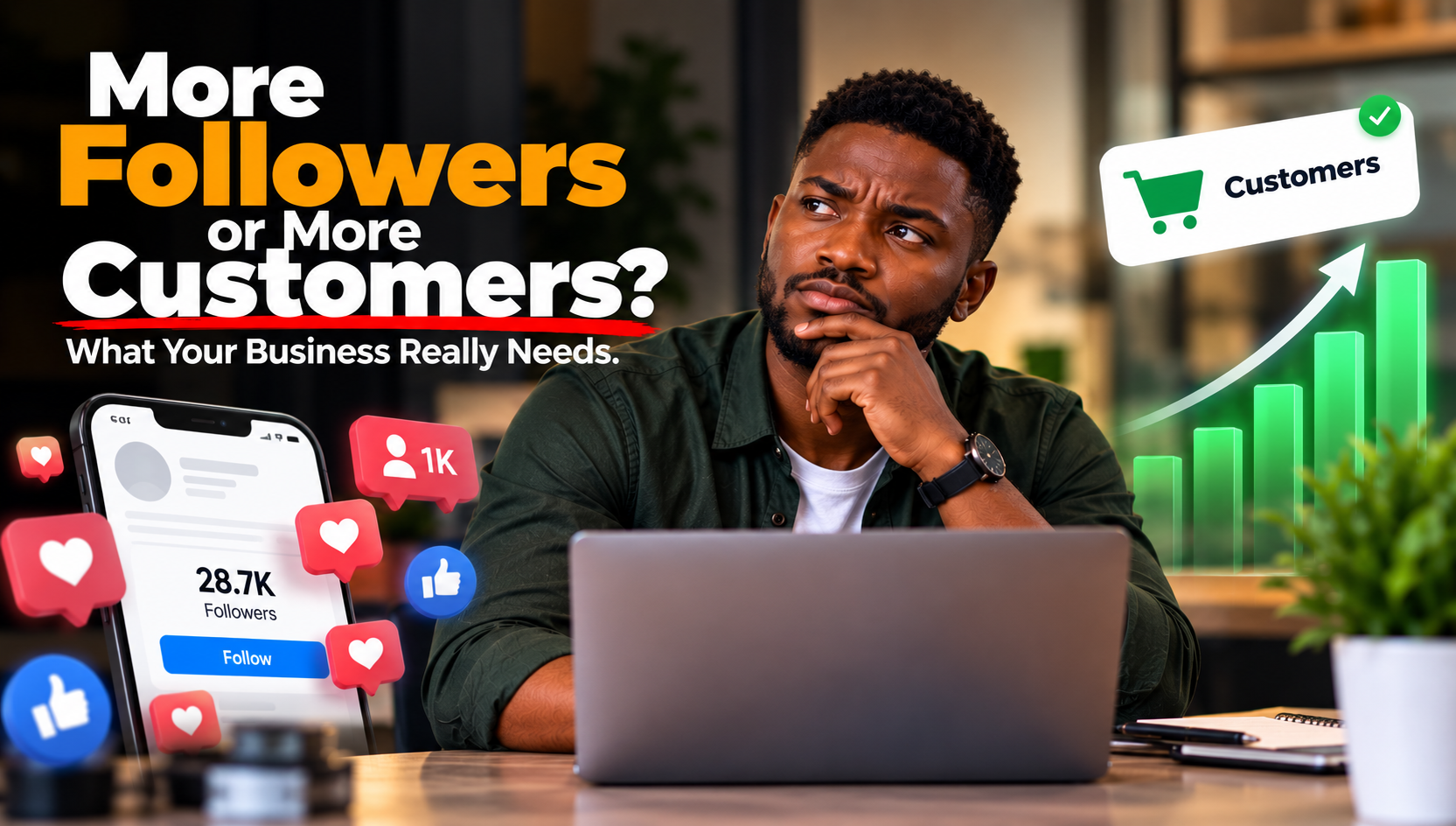
How many of those followers are actually becoming customers?
Because at the end of the day, followers don't pay your bills. Likes don't keep your business running. Views don't automatically translate into revenue.
Your business doesn't necessarily need more followers.
It needs a marketing system that turns attention into customers.
Followers Are Not the Same as Customers
Imagine you have 20,000 followers on Instagram but only generate a handful of sales every month from the platform. Now compare that with a competitor who has 3,000 followers but consistently generates leads and sales.
Who is actually winning?
The answer is obvious.
The problem is that businesses often become obsessed with vanity metrics. They look at follower growth, likes, impressions and views because these numbers are easy to see and exciting to celebrate.
But numbers can look impressive without having much impact on the business.
A post can generate 50,000 views and produce zero customers. Another post can receive only 2,000 views but generate 20 serious enquiries.
The second post may have created far more business value.
This is why your social media strategy shouldn't be built around getting more people to follow you. It should be built around getting the right people to trust you, engage with you and eventually buy from you.
The Real Question Is: Who Are You Trying to Reach?
One of the biggest mistakes businesses make online is trying to appeal to everyone.
They want more followers, so they create generic content that anyone can enjoy. They chase trends, participate in challenges and post whatever seems likely to generate engagement.
But your business doesn't need everyone.
It needs the people who have a problem your product or service can solve.
A real estate company doesn't simply need followers. It needs people interested in buying property or investing in land.
A fashion brand doesn't simply need likes. It needs people who are interested in buying clothes.
A restaurant doesn't need thousands of random viewers from countries where it doesn't operate. It needs people who can actually visit, order or make reservations.
A professional service business doesn't need viral videos for the sake of going viral. It needs qualified prospects who understand the value of its services.
The goal isn't maximum attention. It's relevant attention.
Stop Creating Content Just to Fill Your Page
One of the questions businesses ask most often is:
“What should we post today?”
It's a reasonable question, but it can reveal a deeper problem.
If your entire marketing strategy revolves around finding something to post every day, you may be treating content as the strategy rather than seeing content as part of the strategy.
Every piece of content should have a purpose.
Some content should introduce your brand to potential customers. Some should educate them. Some should demonstrate your expertise. Some should build trust. Some should address objections. Some should showcase your products or services. And some should encourage people to take action.
When these pieces work together, your social media presence becomes more than a collection of posts.
It becomes a customer journey.
Your Followers Need a Reason to Buy
Getting someone to follow your business is only the beginning.
The next question is:
Why should they buy from you?
Your content needs to answer that question consistently.
If a potential customer visits your page and sees nothing but promotional graphics, motivational quotes and generic greetings, they may not have enough information to make a purchasing decision.
But imagine they visit your page and immediately see useful educational content, customer experiences, demonstrations of your expertise, answers to common questions, behind-the-scenes content and clear explanations of what makes your business different.
Now you're giving them reasons to trust you.
And trust is one of the most important factors in turning an audience into customers.
People don't simply buy products.
They buy confidence.
They want to know that you understand their problem, that your solution works and that choosing your business won't be a mistake.
Your Marketing Needs a Conversion Path
A strong digital marketing strategy doesn't stop at getting someone to interact with your content.
It asks:
What happens next?
Someone sees your Instagram post. What should they do?
Someone watches your video. Where should they go?
Someone visits your website. What action should they take?
Someone sends you a WhatsApp message. How should the conversation move toward a sale?
Without a clear conversion path, your audience can consume your content and disappear.
That's why businesses need to think beyond social media posts.
Your content, advertising, website, landing pages, WhatsApp, email marketing and sales process should work together.
The objective is to move potential customers from awareness to interest, from interest to trust, and from trust to action.
A Smaller, More Relevant Audience Can Be More Valuable
There's nothing wrong with growing your audience. In fact, audience growth can be extremely valuable.
The problem is believing that audience size is the ultimate goal.
Imagine two businesses.
Business A has 50,000 followers but most of them rarely interact with the brand, don't understand the product and have little intention of buying.
Business B has 5,000 followers, but those followers are highly interested in what the business sells. They regularly ask questions, visit the website, request prices and make purchases.
Business B may have a much healthier digital presence.
This is why businesses should focus on quality, relevance and intent, not just quantity.
You don't need everyone.
You need the right people.
This Is Where Strategy Makes the Difference
Growing a business online requires more than posting consistently.
It requires understanding your audience, defining your positioning, creating the right content, running strategic advertising campaigns, building trust and creating a clear path to conversion.
That's where digital marketing strategy becomes important.
At Mozul Africa, we don't believe businesses should simply be active online. We believe their digital presence should contribute to business growth.
We combine strategy, content creation, social media management, paid advertising, branding and other digital marketing solutions to help businesses move from simply being visible online to actually building a digital brand that works.
Because the goal isn't to make your business look busy.
The goal is to make your marketing work.
So, Do You Need More Followers?
Maybe.
But before you spend the next six months trying to grow your follower count, ask yourself a more important question:
Are the people already following you becoming customers?
If the answer is no, getting another 10,000 followers may not solve your problem.
You may need better positioning.
You may need better content.
You may need a stronger offer.
You may need a better advertising strategy.
You may need a clearer conversion path.
Or you may simply need a marketing strategy that connects everything together.
Your business deserves more than impressive numbers on a dashboard.
It deserves measurable growth.
Ready to Turn Your Online Presence Into a Growth Engine?
If your business is getting views, likes and followers but you're not seeing enough enquiries or sales, it's time to look beyond the numbers.
Book Your Free 30-Minute Strategy Call
No commitment. No fluff. Just a real plan built for your business.
In 30 minutes, we will audit your current marketing, identify your most profitable untapped audience in Nigeria, and hand you a custom ad strategy you can use immediately, whether you work with us or not.
It is free because we are that confident in what we will show you.
Click Here to Book Your Spot. Only 10 spots available this week.
Your competitors are already running ads. The question is: are they better than yours?